
Innovation in the Vineyard
Innovation in the Vineyard: Connectivity, AI, and the Future of Winegrowing at Iron Horse
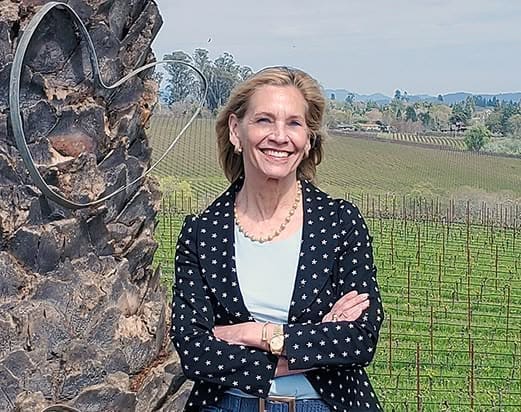
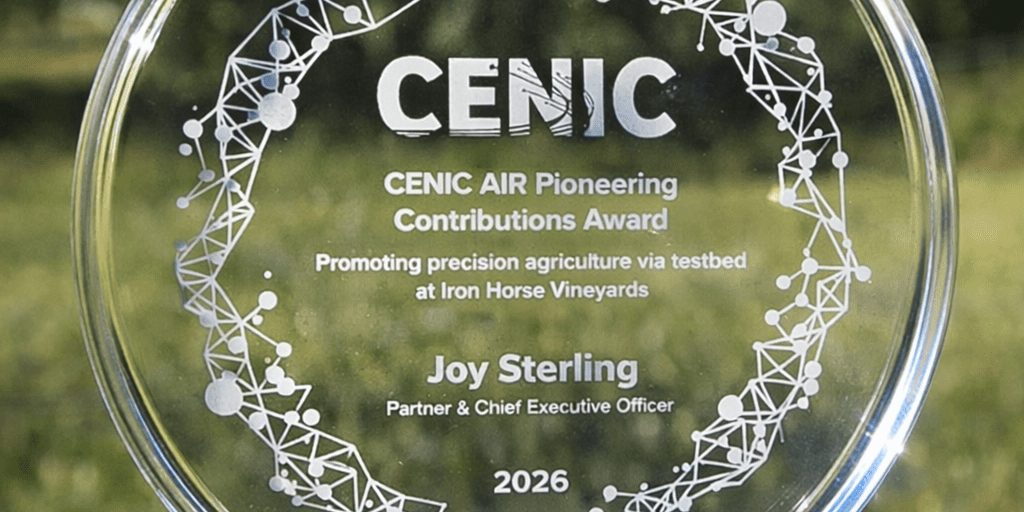
When asked whether we are innovators, I am quick to raise my hand for Iron Horse. We’re at the forefront of innovation in the vineyard, and honored to receive the CENIC AIR (AI Resources) Pioneering Contributions Award in recognition of the precision agriculture testbed we are building at Iron Horse.
The recognition feels especially meaningful because we think of ourselves as both stewards of the land and innovators. To us, stewardship and innovation are flip sides of the same coin. Together, they lead to our ever-higher standard of quality.
The testbed project began with a conviction I came to over eight years on the FCC Task Force for Precision Agriculture: agriculture needs testbeds. Farmers need places where we can see what becomes possible when connectivity truly exists. It is deeply rewarding to see that idea taking shape here at our home place, and to help create a model others can learn from, work with, and build on.
That vision started to take shape in December 2024, when Iron Horse began working with CENIC and AT&T to bring fiber to the farm. Now, together with UC San Diego, the San Diego Supercomputer Center, Sonoma State University, and other technology partners, we are instrumenting the testbed, collecting and processing the data, archiving it, and making it accessible through the National Data Platform.
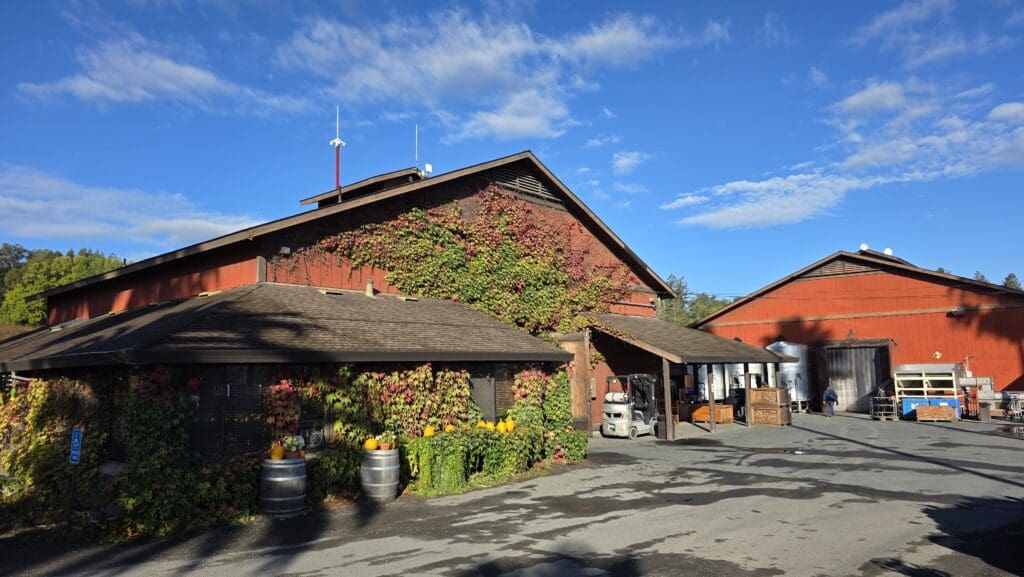
Four state-of-the-art thermal cameras on our winery roof safeguard the surrounding community within a 30 miles radius
Today, that testbed has become a living laboratory for precision agriculture. It brings together a 10 Gbps fiber network, LoRaWAN antennas and vineyard sensors, drone and 360-degree imaging, environmental monitoring for fog, rain, humidity, and CO₂, and fire cameras connected into the state wildfire-alert network. Together, these systems allow us to track the vineyard in real time, at a level of detail and extent that simply was not possible before.
Across the property, 104 LoRaWAN sensors in 22 modules are placed in a wide range of locations, including upper- and lower-hill vineyard sites. In practical terms, that means tracking meaningful variation from higher ground, where water sheds naturally, to lower areas where fog is more likely to settle. Understanding and responding to that variation is exactly the point.
It helps us better understand the vineyard’s many microclimates, how they shape the cadence of the vines, and how best to fine-tune our farming practices to meet the vines’ needs, help us catch the unexpected earlier, achieve the highest quality, and express the distinctive character of our site through our wines.
DJI Mavic 3 Multispectral drone over Iron Horse
Especially exciting is how the drone and sensors amplify and extend our vigilance. After 50 vintages, we know this property well. We know which blocks are the champions and which tend to need more attention. But no one can inspect every vine personally every day. At Iron Horse, that would mean walking roughly 200 miles. What this technology adds is earlier detection, greater precision, and the ability to respond faster, especially when it comes to mildew, pests, frost protection, and other fast-moving challenges.
These are not abstract data points. They help us pinpoint which vines need more hands-on attention, from leaf pulling to shoot thinning, to achieve the right balance between fruit and canopy and produce the best possible wine. They can also help in moments of urgency. For example, drone imagery during frost protection can identify clogged overhead sprinklers and send us directly to what needs to be remedied, rather than wandering the vineyard looking for problems.
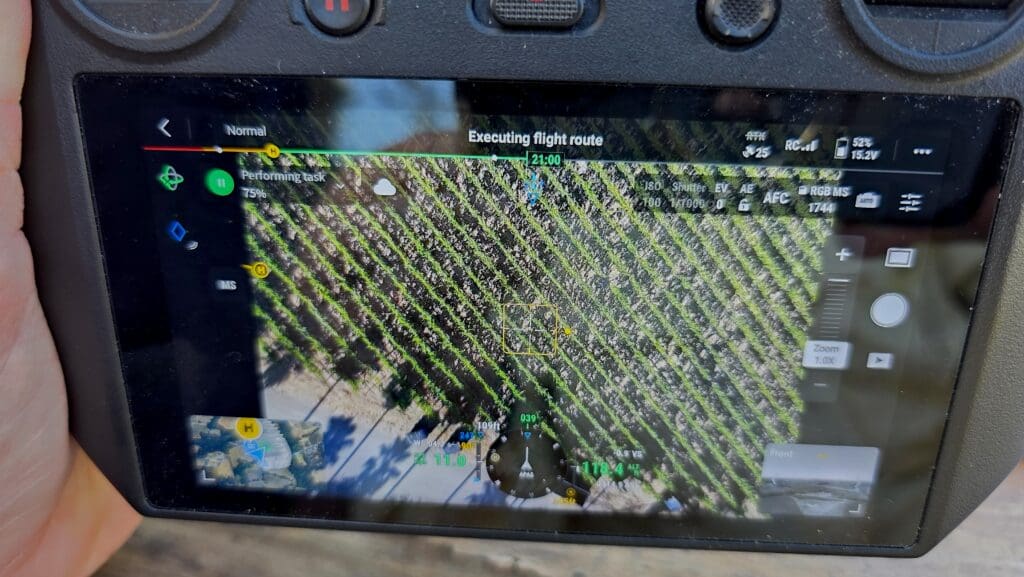
Drone’s-eye view of the vineyard
Over time, drone imagery and 3D video tagged with metadata such as budbreak may help us see shifting weather trends more clearly and understand how they are changing the rhythm of the vineyard from vintage to vintage – —insights that speak directly to climate resilience in fine winegrowing.
AI is an important part of where this is headed. Connectivity provides real-time sensing, and AI in vineyard management turns that data into predictive insight. The goal is not to replace the farmer, but to strengthen our judgment with pattern recognition, predictive modeling, and precision response. In fine wine, where small differences define greatness, technology is not about scale. It is about nuance.
.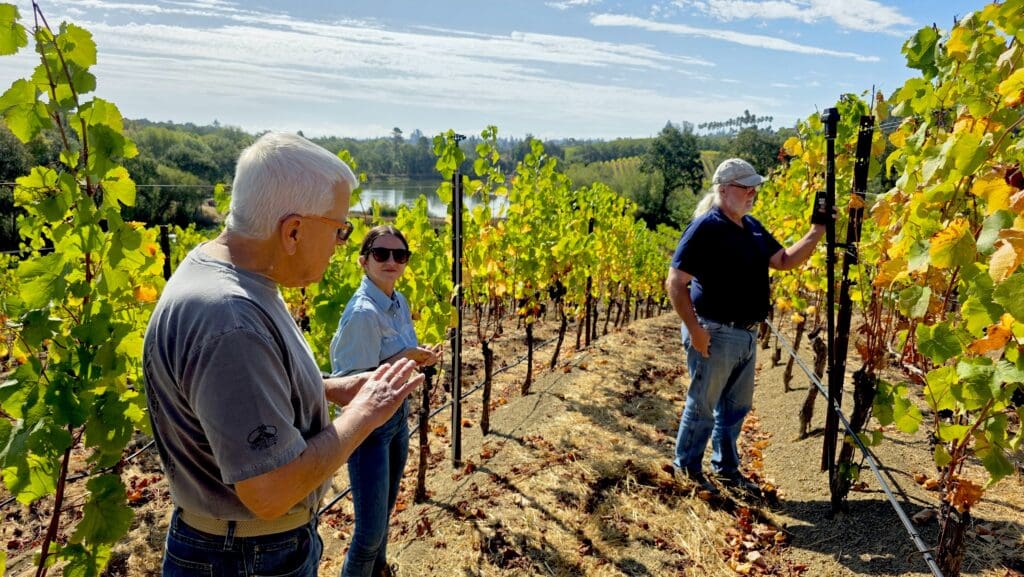
Winemaker David Munksgard, Crop Care Scout Emily Panovich and UCSD Senior Research Scientist John Graham
Sonoma State University faculty and students are actively involved, capturing UAV and Insta360 data, helping build the platform that stores, organizes, analyzes, visualizes, and makes that data available for use, and advancing the work of building a digital twin of the vineyard: a virtual model that can be visualized, studied, and explored through virtual experimentation as it grows over time through ever more layers of insight.
We are using a DJI Mavic 3 Multispectral drone, designed for precision farming and land analysis, which captures green, red, red edge, and near infrared bands for advanced crop-health monitoring. Alongside it, 360-degree video preserves broader environmental context and supports multiple research perspectives. A single day of drone and 360° capture can generate tens of gigabytes of footage, all of it uploaded through a university-caliber research pipeline built on Nautilus, a scalable platform for storing and processing large research datasets and then cataloged through the National Data Platform so it can be discovered and shared for broader research use.
We have bragging rights as the only vineyard with a Science DMZ. That connectivity has allowed us to install four fire cameras on the property, connected via HPWREN to UC San Diego’s WiFIRE Lab and contributing real-time imagery to Alert California. In a region where wildfire awareness matters deeply, that is a meaningful benefit not only to the vineyard, but to our community. Here is the link to see it live.
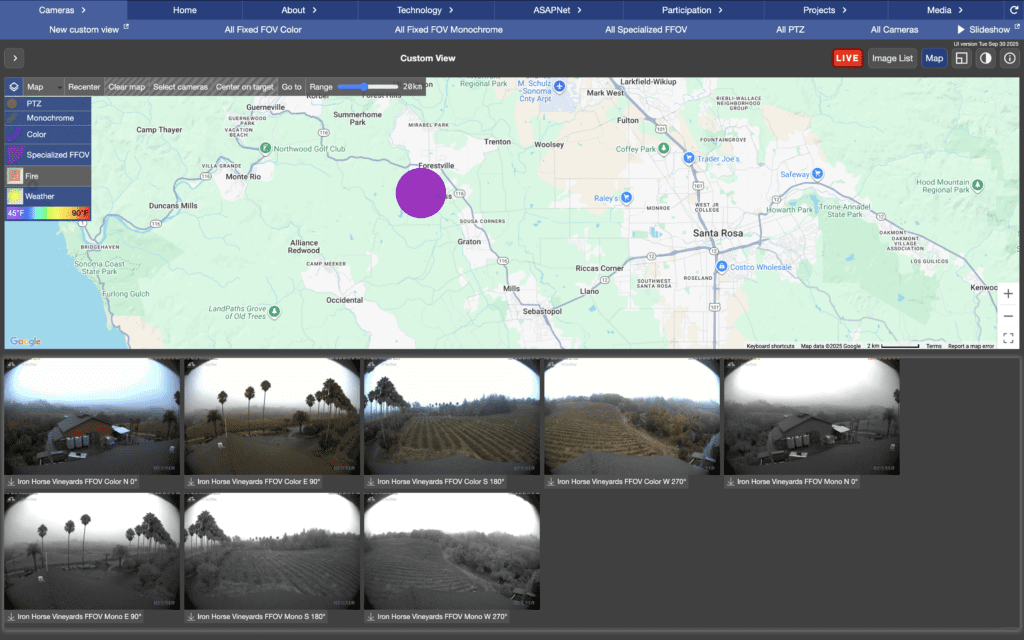
A shot from the live cameras you can see yourself online.
One of the most important aspects of the project is its commitment to open access. The work includes compiling open-access databases for precision agriculture researchers, distributing methods and software for collecting LoRaWAN sensor data and processing drone and Insta360 data to CSU and UC campuses with farms, and providing hands-on training in sensors, drones, data science, and viticulture. Just as importantly, the project is meant to attract young people into viticulture through real-world experience and hopefully inspire and cultivate the next generation of farm stewards.
In the end, this work is about pairing innovation with experience, so we can farm with greater precision, conserve resources more thoughtfully, better express the distinctive qualities of our home place through our wines, and share what we are learning.
Half-jokingly—but only half—my ulterior motive in all of this is to attract young people to agriculture.
Featured Wines

2019 Spirit of ’76
-
2020 Ocean Reserve
-
2022 Spring Rosé